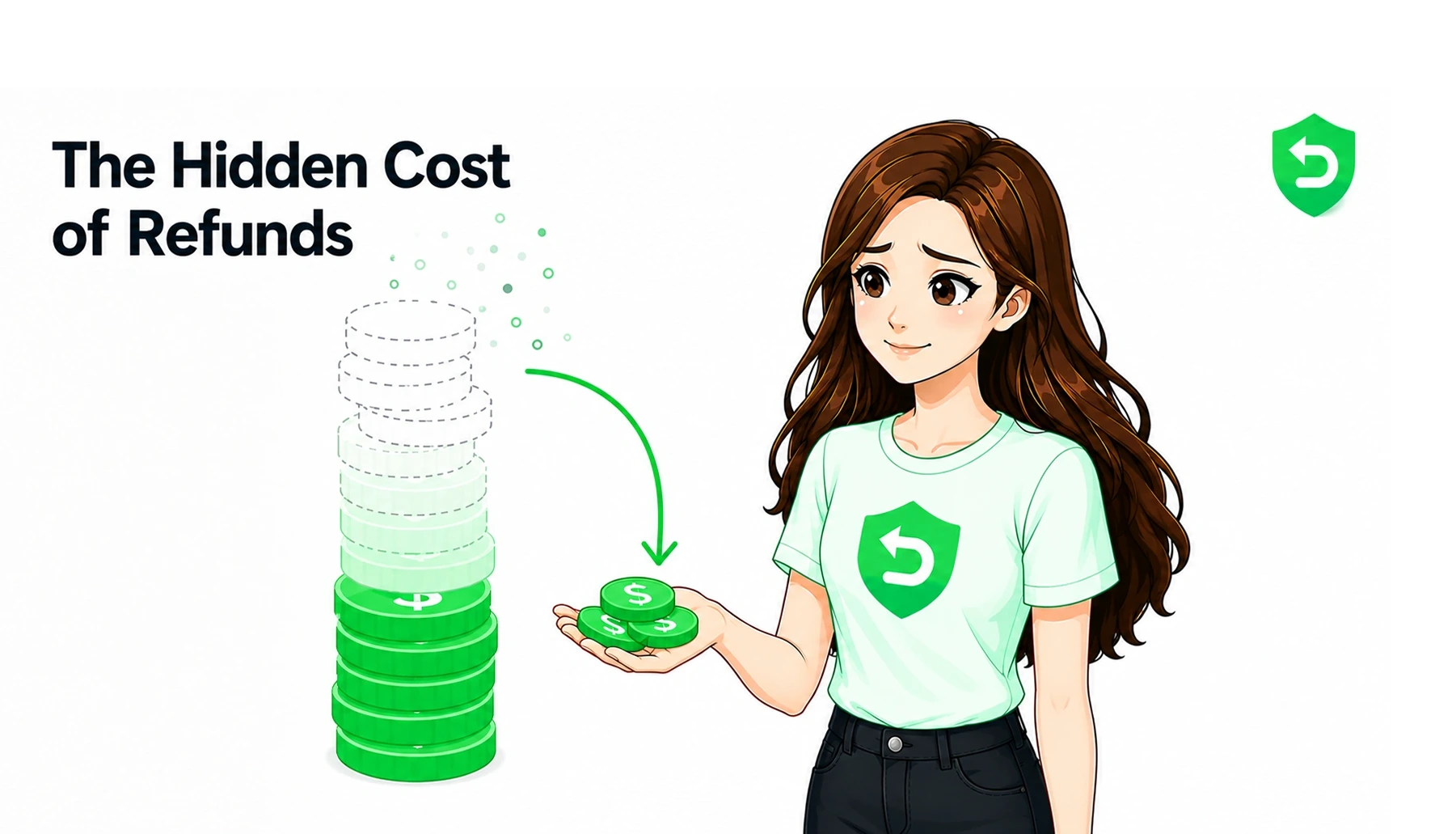
Quick answer: Refunds don't directly change your App Store ranking the way a review score does the stores don't publish "refund rate" as a ranking factor. But refunds are tangled up with the signals that do matter: retention, revenue stability, and reviews. A high refund rate often travels with churn and dissatisfaction, and the same unhappy users who request refunds tend to leave the negative reviews that visibly hurt your listing. So the honest answer is: refunds hurt your reputation and your growth signals more than they hit a single ranking dial.
The direct answer
Let's be precise, because there's a lot of loose claiming on this topic. Apple and Google do not publish "refund rate" as a documented ranking factor, and there's no public evidence that a refund, by itself, directly demotes your app in search or charts the way a wave of one-star reviews would.
If someone tells you refunds directly tank your ranking, they're overstating it. But if you conclude refunds are therefore harmless to your visibility, you're making the opposite mistake because the damage runs through everything refunds are connected to
The indirect damage is the real damage
Here's the more useful way to think about it. A refund is rarely a standalone event. It's usually the visible tip of a chain:
Unhappy or regretful user → refund request → often a negative review → and a churned user who won't drive retention or word-of-mouth.
The stores absolutely respond to the downstream parts of that chain. Reviews and ratings are a well-understood influence on both conversion and visibility. Retention and engagement signals matter for how apps are surfaced. Revenue stability matters for how a subscription business is perceived and, in some contexts, featured. Refunds sit upstream of all of it. So the refund doesn't need to be a "ranking factor" to hurt your ranking it just needs to be reliably attached to the things that are.
How refunds and reviews overlap
The refund-to-review overlap deserves its own attention, because it's the most visible and most damaging link.
The same trigger that makes someone request a refund the app didn't do what they expected, they felt tricked by a trial, a purchase didn't deliver is exactly what produces a one-star review. Often it's the same person doing both. And unlike the refund, which happens quietly between the user and the store, the review is public and permanent. It shapes what the next thousand prospective users see.
So while you can't control whether the store counts refunds against you, you can recognize that the population of refund-requesters and the population of negative-reviewers heavily overlap which means reducing the friction that drives refunds tends to reduce the reviews that visibly hurt you, too.
The retention and revenue signal
There's a second, quieter cost. Refunds distort the exact metrics you and the stores use to judge an app's health:
They lower effective LTV, making your unit economics look worse than your product actually is.
They inflate churn, muddying the retention picture.
They skew marketing ROI, so you make acquisition decisions on bad numbers.
None of that is a ranking penalty in the formal sense. All of it makes your app look and perform worse on the dimensions that drive sustainable growth and a business that appears to be shedding revenue and users is not one the ecosystem rewards.
What you can actually control
Here's the practical part. You can't rewrite the store's ranking logic, but the refund side of this chain has two controllable levers:
Reduce the refunds that come from genuine friction. Clear trials, honest paywalls, and delivering what the purchase promises cut the refund-and-one-star population at the source. This is product and UX work, and it's the highest-value fix.
Stop losing the contestable refunds by default. A large share of refunds aren't about genuine dissatisfaction at all they're trial abuse, use-and-refund, and "accidental" purchases on long-active accounts. Those you can respond to, and losing them to a missed 12-hour window is pure leakage. (See The 12-Hour Window and How to Automate Apple Refund Requests.)
RefundSensor addresses the second lever directly: it responds to every eligible Apple CONSUMPTION_REQUEST and Google Play chargeback review inside the window, and its analytics break down where your refunds actually come from by app and by reason so you can see which are genuine friction (a product fix) and which are contestable leakage (an automation fix). That visibility is what turns "refunds are hurting us" into a problem you can act on instead of absorb.
Further reading
The 12-Hour Window: Why Most Developers Lose Refunds by Default
Google Play Refunds & Chargebacks: What Developers Can Actually Contest
See where your refunds really come from. RefundSensor responds to eligible Apple and Google Play refund requests inside the window and breaks down every refund by app and reason so you know what's genuine friction and what's contestable leakage. Start free →
Frequently asked questions
There's no published ranking factor for refund rate, so not directly in a documented way. But refunds are tied to reviews, retention, and revenue signals that do influence visibility, so the indirect impact is real.
Strongly, because the same dissatisfaction that drives a refund often drives a negative review, frequently from the same user. The review is public and lasting, which makes it the more visible damage.
Indirectly. Reducing refund-driving friction tends to reduce negative reviews and improve retention signals, which are the things that actually influence App Store optimization.
No. Many are trial abuse, use-and-refund, or "accidental" purchases on established accounts. Those are contestable and shouldn't be lumped in with genuine dissatisfaction, which is why refund analytics by reason matter.
Stop losing contestable refunds to a missed response window. It's leakage you can close with automation, separate from the longer product work of reducing genuine friction.